Crazy Time Pulls Players In Fast. Understanding Why Changes How You Play
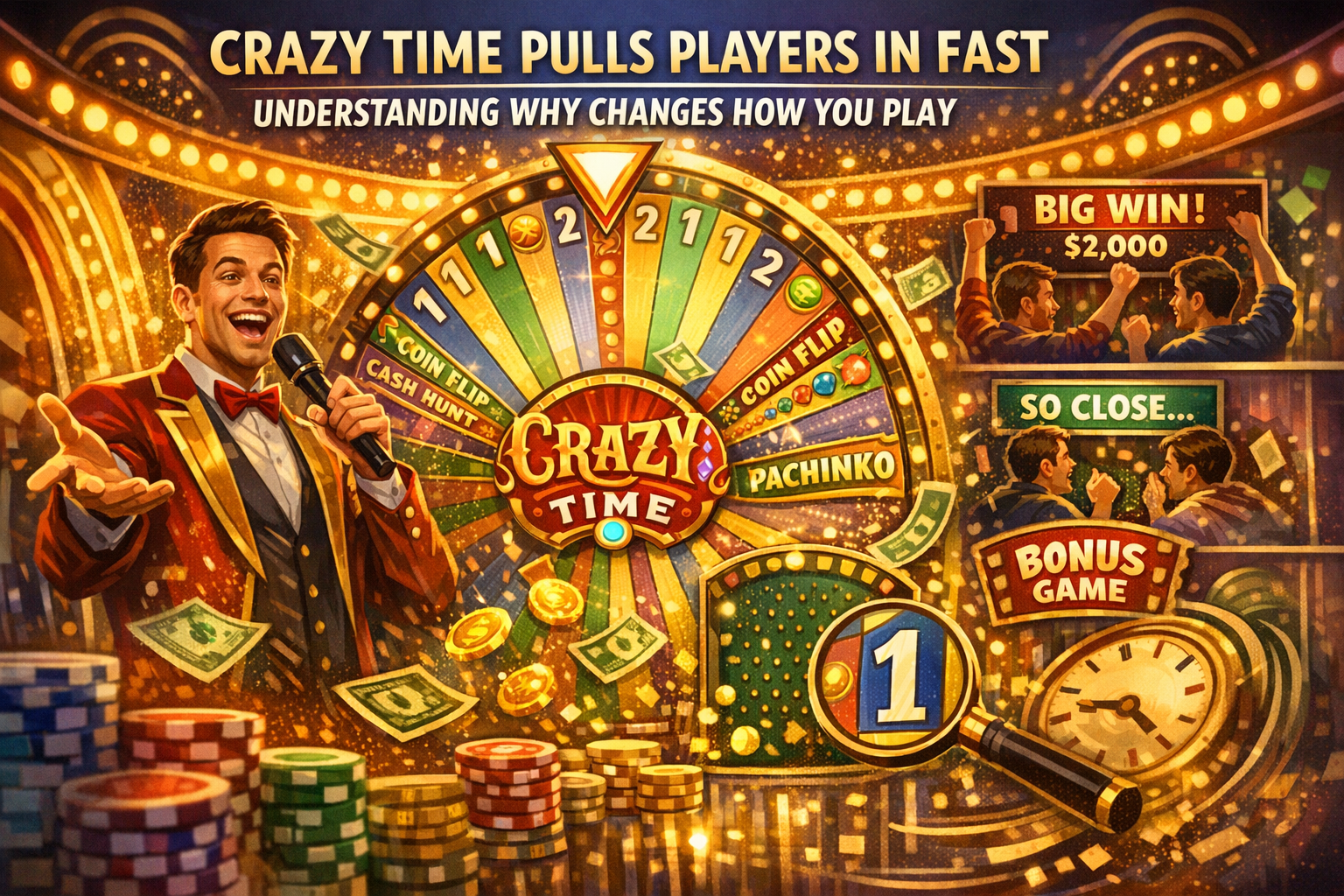
Most casino formats ask you to place a bet and wait. Crazy Time does something different — it makes the wait feel like part of the experience. The live host, the spinning wheel, the escalating bonus rounds: the game is structured around sustained emotional engagement, not just outcomes. That distinction matters, because it shapes every decision a player makes, including the ones they don't realize they're making.
The Psychology Behind the Pull
Crazy Time sits at an unusual intersection of game show and gambling format. It borrows visual and emotional cues from entertainment television — a charismatic host, real-time reactions, dramatic escalation — and layers betting on top of that structure. The result is a format where the experience of playing feels distinct from the outcome of playing.
This design has well-documented psychological effects. Players tend to remember large wins far more vividly than the smaller, more frequent losses that precede them. Bonus rounds feel like entering a new stage of play rather than simply receiving a payout, which creates a sense of progression that isn't actually there. And the near-miss effect — where outcomes that almost triggered a bonus register as meaningful — keeps attention locked in even during losing stretches.
These are not flaws in how players think. They are predictable responses to a format specifically built to produce them. Recognizing that doesn't make the game less engaging. But it does make impulsive decisions easier to identify.
What the Wheel Actually Does — and Doesn't Do
The mechanics of Crazy Time are less complex than the experience suggests. A large physical wheel with 54 fixed segments determines each outcome. The distribution is weighted heavily toward low-value numbers: the segment marked 1 occupies more than a third of the wheel, and the segment marked 2 accounts for a further significant portion. Bonus games — Coin Flip, Cash Hunt, Pachinko, and the Crazy Time round itself — occupy progressively fewer slots, with Crazy Time appearing on only a single segment.
Every spin is statistically independent. The wheel carries no memory of previous results. A run of ten consecutive low-value outcomes does not increase the probability of a bonus on the eleventh spin. This is not a matter of interpretation — it is how probability works in a system without conditional dependencies. The sense that the game moves in rhythms or clusters is a cognitive pattern applied to genuinely random data.
The return-to-player percentage sits in the mid-nineties range, but that figure is calculated across an enormous volume of rounds. In any individual session of reasonable length, results can deviate substantially from that average in either direction. RTP is a long-run statistical property, not a session guarantee.
Strategy Without Illusion
Once the mechanics are clear, what remains is how a player chooses to allocate their bets and manage their time at the table. No approach changes the underlying probabilities, but different styles produce meaningfully different experiences.
A conservative approach — concentrating bets on the high-frequency number segments — produces smaller, more regular returns and limits the volatility of any given session. It is less exciting, but it extends play time and reduces the risk of sharp, rapid losses.
A balanced approach splits bets between number segments and one or two bonus games. This preserves some frequency of return while keeping open the possibility of a larger payout when a bonus lands. Most experienced players gravitate toward some version of this over time.
An aggressive approach focused on bonus segments accepts long stretches of no return in exchange for higher potential payouts when bonuses hit. It is a coherent choice for players who understand and accept the variance, but it requires genuine tolerance for losing runs that can feel disproportionately long given how rarely those segments appear.
Across all three styles, the habits that make a practical difference are consistent:
- Set a session budget before starting and treat it as fixed, not adjustable in response to results
- Keep bet sizes stable rather than increasing them in response to a losing run
- Avoid using previous results as a basis for the next decision
- Treat bonus appearances as rare events by design, not as outcomes that are "due"
- Take deliberate breaks, particularly after extended periods of low-value results
None of this is secret knowledge. But the gap between knowing these things and actually doing them during a fast-paced live session is where most bankrolls erode.
The Case for Playing the Demo Version First
Many players bypass the demo version entirely, assuming that the real-money experience is simply a version with financial stakes added. That framing misses the actual value of demo play.
Without money on the table, a player can observe the game with a different kind of attention. They can watch how often specific segments actually land over a meaningful number of spins, rather than the handful they remember from recent sessions. They can run through bonus rounds and see how their mechanics work — not in theory, but in practice, including the wide range of outcomes those rounds can produce. They can experiment with different bet distributions and notice how quickly a balance shifts under each approach.
This kind of observation doesn't produce a system for winning. What it does produce is a more accurate mental model of the game — one grounded in what actually happens rather than what feels like it should happen. That distinction, carried into real play, tends to result in calmer, more consistent decision-making. Which is, in practice, the closest thing to a genuine advantage any player can develop.